On this page
- Why New Orleans Sees This Every Hurricane Season
- The Signs a Roofer Is Not Who They Say They Are
- What to Do If a Crew Is Already Knocking
- How to Verify a Louisiana Roofing License in Two Minutes
- What a Local Company Can Show You That a Storm Chaser Can’t
- Not Sure about the Crew at Your Door? Get a Second Opinion First
- Storm-Chaser Scam FAQs for New Orleans Homeowners
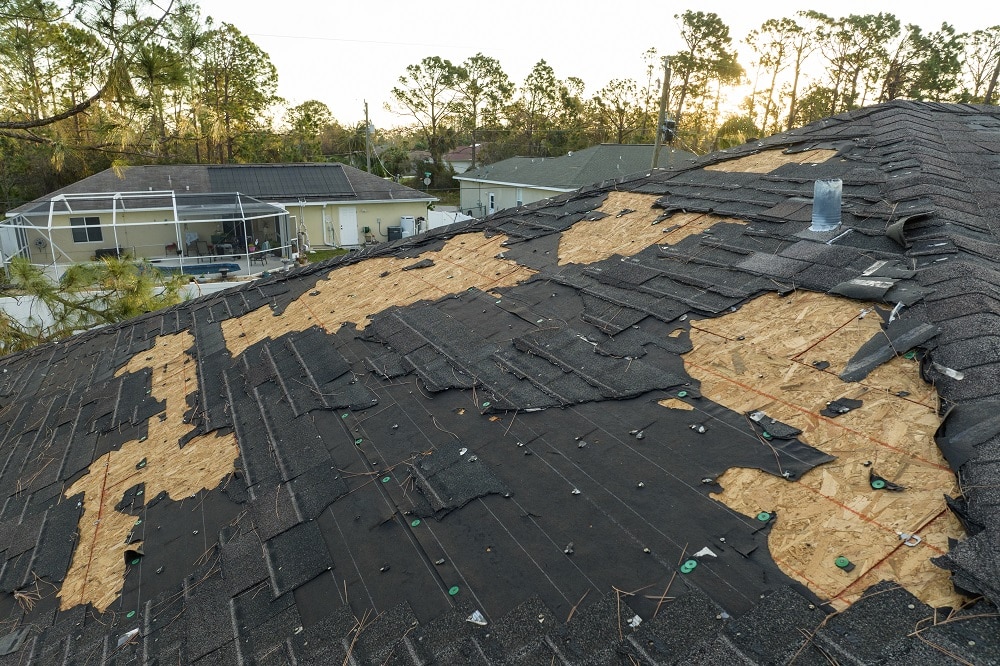
After a hurricane moves through New Orleans, out-of-state roofing crews follow the storm looking for fast work. Some are legitimate. Many are not licensed in Louisiana, take a deposit, and are gone before the first shingle goes on. A few minutes of checking can tell you which one is standing on your porch.
Why New Orleans Sees This Every Hurricane Season
Hurricane season here runs June 1 through November 30, and this city has lived through three storms in recent memory that brought crews from out of state within days: Katrina, Zeta, and Ida. Wherever the damage is heaviest, the trucks show up first. Slidell and Mandeville have both seen it firsthand after major storms, with door-to-door canvassing starting before some homeowners have even gotten their power back.
The pattern is not new, and it is not unique to any one storm. A crew knocks, points at real damage on your roof, and offers to start today if you sign now. That urgency is the tell. A local roofer who plans to still be here next hurricane season is not worried about losing the job to tomorrow.
This matters more here than in most markets, because most roof replacements in New Orleans start with filing an insurance claim, not a homeowner who simply decided to upgrade. The person on your porch may be asking for more than a signature on a repair job. They may be asking to be written into your claim, sometimes before an adjuster has even seen the roof. A rushed signature at that stage can shape what your insurer is willing to pay for later, which is exactly why the decision is worth ten minutes of checking instead of ten seconds.
The Signs a Roofer Is Not Who They Say They Are
None of these signs alone proves a scam. Together, they are worth stopping for.
No Louisiana License Number They’ll Give You Straight
Ask for it directly. A legitimate contractor gives you a number without hesitating, because Louisiana requires one for any residential roofing job above the state’s licensing threshold. A crew that changes the subject, says their “home office handles that,” or gives you a number that does not match the name on their truck is telling you something.
Pressure to Sign a Contract Today
“This price is only good if you sign right now” is a sales tactic, not a roofing fact. Shingles, underlayment, and labor do not get more expensive by tomorrow afternoon. A contractor rushing you past the reading-the-contract step is counting on you not reading it.
A Full Deposit Before Any Paperwork
Some deposit is normal. A demand for the entire job, in cash, before a written estimate exists, is not. If the crew is gone by the time you notice the work was never scheduled with a permit, there is no local office to walk into and no local reputation for them to protect.
What to Do If a Crew Is Already Knocking
You do not have to make a decision on the porch. Write down the company name exactly as it appears on the truck, the license number they give you verbally, and the phone number on their card, even if it is a cell number. A legitimate contractor has no reason to mind you writing this down before they leave.
Tell them you will call back once you have checked their license and gotten a second opinion. A storm chaser working a two-week window generally will not wait for that call. A local company will, because losing one job to a homeowner who did their homework is not the same threat to them that it is to a crew that only has this storm to work.
If the damage is severe enough that you are worried about further rain getting in before you can arrange a proper repair, a tarp is a reasonable stopgap. Paying a stranger in full for a permanent repair on the spot is not the same decision, and it should not be treated as one just because both involve someone standing on your roof.
How to Verify a Louisiana Roofing License in Two Minutes
Louisiana requires roofing contractors above the statutory threshold to be licensed through the Louisiana State Licensing Board for Contractors. Take the license number a contractor gives you and check it against the board’s public contractor search before you sign anything. If the number does not come back, or comes back under a different company name, stop there.
It takes less time than the sales pitch you just sat through. Search the company name and the license number separately, since a scam operation will sometimes give a real license number that belongs to an entirely different, unrelated contractor. If the name on the license and the name on the truck do not match, that is your answer.
This is also the fastest way to tell a real local roofer from a storm chaser without waiting for anything to go wrong first. TurnKey Roofer’s own numbers are posted for exactly this reason, not buried where you’d have to go looking: Louisiana Residential License #890459 and Commercial License #3667, both checkable the same way. You can see them, along with who is actually behind the company, on our about page before you ever pick up the phone.
What a Local Company Can Show You That a Storm Chaser Can’t
A storm chaser has a truck and a storm to follow. A local company has an address, a license history, and a reason to still answer your call next year if something goes wrong with the work. TurnKey Roofer works New Orleans and the surrounding parishes every week, storm or no storm, which is the opposite of a crew that only exists for the two weeks after a hurricane.
A License History, Not Just a License Number
Anyone can read you a number. A local roofer’s license has a history attached to it that the state board can confirm, tied to a company that has been filing under that name for longer than one storm cycle.
A Job You Can Check Before You Call
Ask any contractor a question a storm chaser can’t answer without stalling: where were you working last month? A roofer with a real local book of jobs can tell you, and often can point you to a street you’d recognize. A crew that arrived three days ago cannot.
Someone to Call Next Hurricane Season
A workmanship warranty is only worth something if the company that wrote it still exists when you need it. A storm chaser that has moved on to the next state has nobody left to call. A company still working the same service areas next year does.
If a crew has already been through your neighborhood after this storm and something about the pitch felt off, get a second opinion before you sign anything with them. A second look costs you nothing, and it is a lot cheaper than a deposit that leaves with a truck you can’t find again.
Not Sure about the Crew at Your Door? Get a Second Opinion First
Call (504) 226-7070 for a free, no-pressure inspection, or reach out through our contact page. Louisiana Residential License #890459. Commercial License #3667. Check us before you decide, the same way this post just told you to check anyone else.
Storm-Chaser Scam FAQs for New Orleans Homeowners
Do storm-chasing roofers have any license at all?
Sometimes they hold a license from another state, which does not satisfy Louisiana’s requirement. Some hold no license anywhere. Either way, ask for a Louisiana license number specifically and check it before you sign.
How do I check if a roofing contractor is actually licensed in Louisiana?
Take the license number they give you and search it through the Louisiana State Licensing Board for Contractors’ public contractor lookup. The name on the license should match the name on their estimate and their truck.
Is it normal for a roofer to ask for full payment before starting?
No. A partial deposit tied to a written estimate is standard. A demand for the full amount in cash before any paperwork exists is one of the clearest warning signs of a storm-chaser scam.
What do I do if I already paid a deposit to a crew I can’t reach anymore?
Report it to the Louisiana State Licensing Board for Contractors and to local law enforcement, and contact your insurance company directly, since they may have seen the same company reported before. Get a second, local estimate before paying anyone else.
How do I know if a post-storm repair estimate is inflated?
Get more than one estimate before you commit, especially in the weeks right after a named storm when demand spikes. A local contractor with an ongoing reputation has less reason to inflate a price than a crew that will not be in the area next month.
Will my homeowners insurance still cover repairs if I already paid someone who disappeared?
The storm damage itself is generally still a covered event under your policy. What you paid the crew that vanished is a separate loss your insurer likely won’t reimburse, which is exactly why verifying a license before paying anything matters more than verifying it after.