On this page
- Why Gulf Coast Policies Split Your Deductible in Two
- How a Named-Storm Deductible Actually Works
- Metairie Homeowners: Why This Deductible Gap Catches People off Guard
- Why Your Roofer Should Know Your Deductible before Writing an Estimate
- What to Check before the Next Storm, Not After
- Know Your Numbers before You Need Them
- Roof Insurance Deductible FAQs for New Orleans Homeowners
Most Gulf Coast homeowners insurance policies carry two different deductibles: a standard one for everyday damage, and a separate, larger one that only applies once a storm gets a name. Knowing which one applies before you file a claim changes what you actually owe out of pocket.
Why Gulf Coast Policies Split Your Deductible in Two
Insurers in hurricane-exposed markets learned decades ago that a single flat deductible does not work when one storm can generate more claims in a week than an entire normal year combined. Most Louisiana homeowners policies carry a standard deductible, usually a flat dollar amount, alongside a separate named-storm or hurricane deductible that is calculated differently and applies only under specific conditions.
The two are not interchangeable, and which one applies is decided by how the storm is classified, not by how bad your roof looks afterward.
It also only covers part of the picture. Wind and hail damage to your roof sits with your homeowners policy, but flooding does not, and needs separate NFIP or private flood coverage entirely. A named-storm deductible governs the wind claim. It has nothing to do with whether water that came up from the ground is covered at all, and a homeowner dealing with both a wind-damaged roof and rising water after the same storm is often working two separate claims with two separate insurers, each with its own deductible logic.
Louisiana Citizens Property Insurance Corporation exists as the state’s insurer of last resort for exactly this kind of coverage gap, and the Louisiana Department of Insurance is the place to go if a claim on either side feels like it is being handled unfairly. Knowing which door to knock on before a storm saves real time after one.
How a Named-Storm Deductible Actually Works
A named-storm deductible is not a flat number the way most people expect a deductible to be.
How a Storm Becomes Officially “Named”
The trigger is usually the National Hurricane Center issuing a name, watch, or warning for the storm, not how much wind actually hit your specific address. A storm that gets named and then weakens before reaching Louisiana can still trigger the named-storm deductible on your policy, depending on the exact wording.
How the Percentage Is Calculated
Instead of a flat dollar figure, a named-storm deductible is commonly written as a percentage of your dwelling coverage limit, not your claim amount. The number that matters is what your home is insured for, not what the roof repair actually costs.
As a purely illustrative example of the mechanism, not a real figure for any specific policy: a 2 percent named-storm deductible on a home insured for $300,000 in dwelling coverage works out to $6,000, regardless of whether the actual roof repair costs more or less than that. A standard flat deductible on the same policy might be a few hundred dollars. That gap is the whole reason this distinction is worth understanding before a claim, not during one.
When It Applies Instead of Your Standard Deductible
If the damage happened during a period when a named-storm deductible was in effect, that is the one your insurer applies, even if the same damage would have cost less under your standard deductible. Wind and hail damage outside of a named-storm window typically falls back to the standard deductible instead.
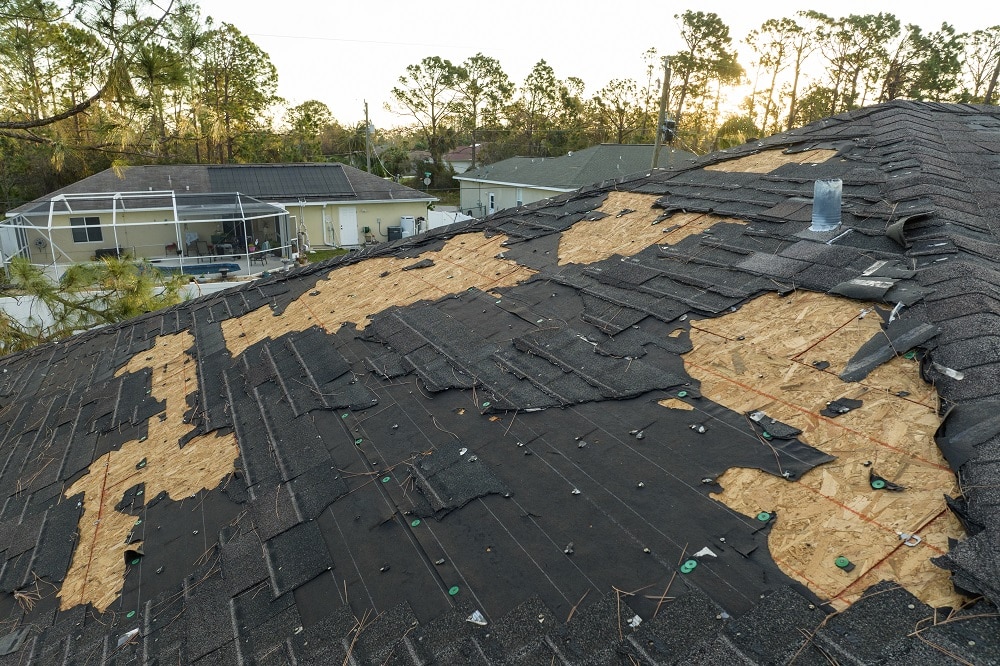
The distinction matters because most Louisiana roof claims genuinely are storm-triggered, not the result of a homeowner deciding to upgrade. A leak that shows up during hurricane season is far more likely to fall under the named-storm figure than the standard one, which is exactly the deductible most people have not actually looked at.
Metairie Homeowners: Why This Deductible Gap Catches People off Guard
Metairie has a lot of older, higher-value housing stock, and a named-storm deductible calculated as a percentage of dwelling coverage hits harder the more a home is insured for. A modest-sounding percentage on a well-insured older home can add up to a bigger out-of-pocket number than homeowners expect, especially compared to the flat standard deductible they are used to thinking about.
This is exactly the kind of detail that is easy to miss until the moment a claim is actually being filed, which is the wrong time to find out. A homeowner comparing three roofing estimates on the kitchen table is usually also, at the same time, trying to work out what their insurer will actually pay toward any of them. The deductible is half of that math, and it is the half most people skip until an adjuster brings it up first.
Why Your Roofer Should Know Your Deductible before Writing an Estimate
A contractor who is going to work with your insurance claim needs to know which deductible applies before writing up a scope of work, not after. An estimate built around the wrong deductible assumption can undersell what you will actually owe, which turns into an unpleasant surprise once the insurer’s check arrives and the math does not match what you were told to expect.
This is also where a rushed, unlicensed crew tends to skip a step. Documenting storm damage in a way that holds up against an adjuster, and writing an estimate that accounts for the right deductible from the start, takes more than a quick walk around the yard. It is part of why the same two things, a real license and a real process, keep coming up as the difference between a claim that goes smoothly and one that does not.
What to Check before the Next Storm, Not After
Pull your policy declarations page and look for both deductible figures before hurricane season is bearing down on you, not during it. If you are already mid-claim and the numbers feel wrong, that is exactly the situation covered by filing a roof insurance claim the right way from the start, with documentation that holds up regardless of which deductible applies.
A wind or hail claim that survives scrutiny also depends on the roof itself. Our 15-year wind warranty has no maximum wind speed and includes named storms specifically, which is a separate question from what your insurance deductible looks like, but the two are worth understanding together before either one gets tested.
The same caution applies to whoever ends up on your roof after the storm that triggers either deductible. If a crew you have never heard of is already at the door offering to “handle the insurance side” for you, that is worth slowing down for, the same way spotting a storm-chaser roofing scam is worth ten minutes before a signature.
Know Your Numbers before You Need Them
Call (504) 226-7070 or reach out through our contact page if you want a second set of eyes on storm damage before you file, or if you are not sure which deductible your policy actually uses. Louisiana Residential License #890459. Commercial License #3667.
Roof Insurance Deductible FAQs for New Orleans Homeowners
What is a named-storm deductible, and how is it different from my regular deductible?
A named-storm deductible is a separate, usually percentage-based deductible that applies once a storm receives an official name, watch, or warning. Your regular deductible is typically a flat dollar amount that applies the rest of the time.
How much is a typical roof deductible?
It varies by policy and insurer, and a named-storm deductible is commonly written as a percentage of your dwelling coverage rather than a flat number. Check your declarations page for the exact figure rather than assuming it matches your standard deductible.
Does a named-storm deductible apply to hail damage, or only wind?
It depends on your specific policy wording, but many Gulf Coast policies apply the named-storm deductible to wind and wind-driven damage, including hail that occurs during a named storm. Damage from an unnamed storm typically falls back to your standard deductible.
How do I find out what my deductible actually is before a storm hits?
Pull your homeowners insurance declarations page, which lists both your standard and named-storm deductibles. If you can not find it or the wording is unclear, your insurance agent can confirm both figures before hurricane season, not during it.
What is the 25% rule for roofing?
Insurers sometimes use a damage-percentage threshold to decide whether a partial repair is enough or a full replacement is required, though the exact rule varies by policy and adjuster. It is worth asking your adjuster directly rather than assuming a specific number applies to your claim.
What should I avoid saying to my insurance adjuster?
Avoid guessing at a cause you are not certain of, and avoid agreeing to a settlement figure on the spot. Take time to review any offer, and it often helps to have a roofer document the damage independently before you finalize anything with the adjuster.